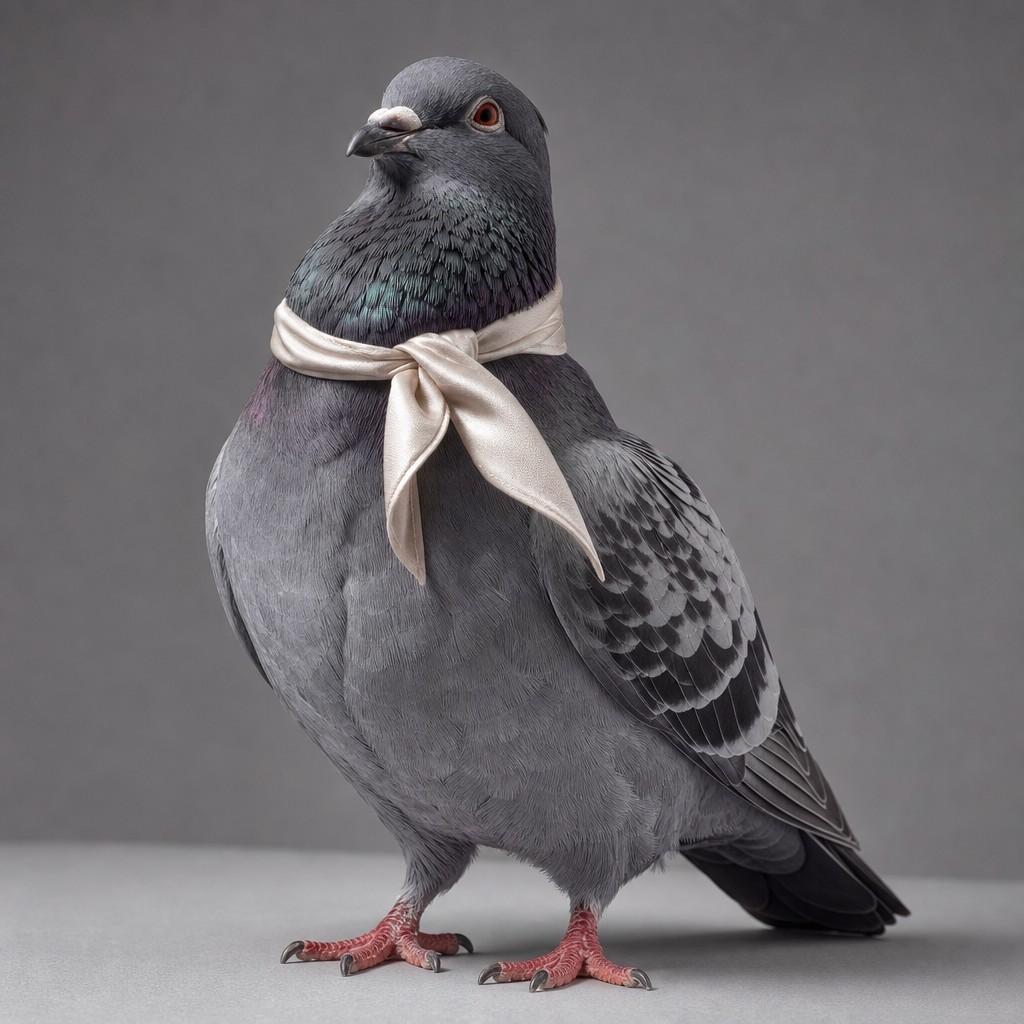
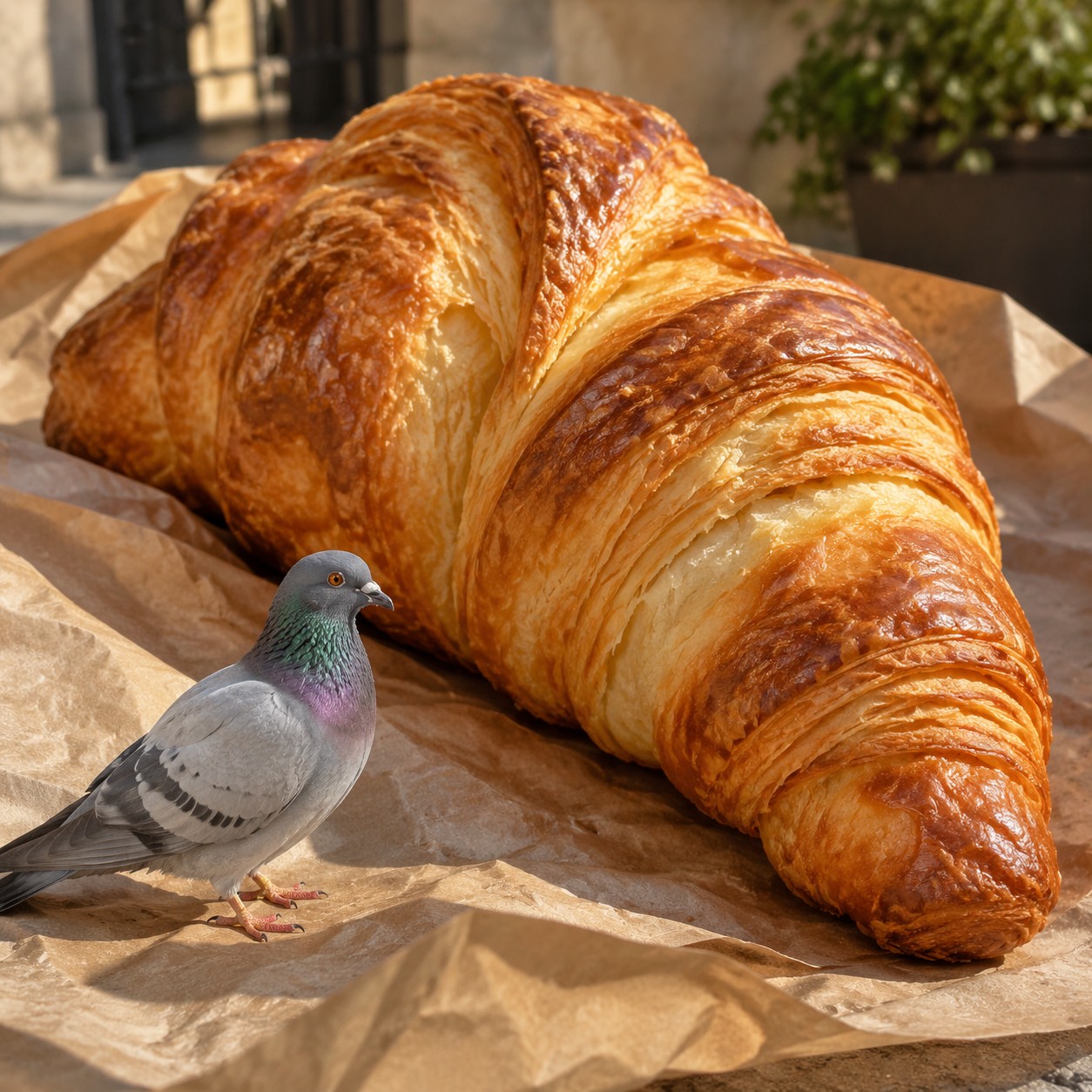
Use Reference Image 1 only for the proud pigeon with the aviator scarf. Use Reference Image 2 only for the oversized croissant. Use Reference Image 3 only for the subway grab handle. In one continuous five-second shot, the Image 1 pigeon holds the Image 2 croissant in its beak and stands on the Image 3 subway handle, swaying with the train. Camera: waist-height handheld sway matching the subway motion. No cuts. Synchronized audio: subway rumble, a proud coo, a faint pastry flake crunch. No readable text, letters, numbers, captions, labels, logos, brands, watermarks, advertisements, posters, UI screens, or product packaging.
Wan 3.0 Reference-to-Video API
alibaba/wan-3.0/reference-to-videoWan 3.0 (Reference-to-Video) transforms text prompts alongside multimodal references including images, video clips, audio, documents, or web links into dynamic video, supporting up to 20 combined assets and 2 to 30 second continuous generation. It preserves subject identity, artistic style, and narrative continuity across scenes while synthesizing synchronized native audiovisual footage.
Input
631/20000
Total references3/21 · remaining 18
3/10 · remaining 7

0/5 · remaining 5
0/5 · remaining 5
Output
ReadyContinue with
Examples
REST API Reference
Quick Start
Submit a reference-to-video request with multimodal assets and retrieve high-definition video outputs.
01
Step 1: Set up authentication
Generate an API Key in the dashboard and attach it as Authorization: Bearer <API_KEY> on all HTTP requests.
- Submit Endpoint
- POST
https://api.vidgo.ai/api/generate/submit - Authorization Header
- Authorization: Bearer VIDGO_API_KEY
02
Step 2: Submit a reference-to-video task
Send a POST request to /api/generate/submit specifying alibaba/wan-3.0/reference-to-video and your multimodal reference assets. Audio may be the only reference type; a prompt is still required.
Submit Request
REQUEST_BODY=$(cat <<'JSON'
{
  "model": "alibaba/wan-3.0/reference-to-video",
  "input": {
    "prompt": "Use Reference Image 1 only for the proud pigeon with the aviator scarf. Use Reference Image 2 only for the oversized croissant. Use Reference Image 3 only for the subway grab handle. In one continuous five-second shot, the Image 1 pigeon holds the Image 2 croissant in its beak and stands on the Image 3 subway handle, swaying with the train. Camera: waist-height handheld sway matching the subway motion. No cuts. Synchronized audio: subway rumble, a proud coo, a faint pastry flake crunch. No readable text, letters, numbers, captions, labels, logos, brands, watermarks, advertisements, posters, UI screens, or product packaging.",
    "duration": 5,
    "resolution": "720p",
    "aspect_ratio": "adaptive",
    "audio": true,
    "enable_safety_checker": true,
    "reference_image_urls": [
      "https://cdn.vidgo.ai/apis/models/alibaba/wan-3.0/reference-to-video/v1/01/input-01.jpg",
      "https://cdn.vidgo.ai/apis/models/alibaba/wan-3.0/reference-to-video/v1/01/input-02.jpg",
      "https://cdn.vidgo.ai/apis/models/alibaba/wan-3.0/reference-to-video/v1/01/input-03.jpg"
    ]
  }
}
JSON
)

RESPONSE=$(curl --silent --show-error --fail-with-body \
  --request POST \
  --url "https://api.vidgo.ai/api/generate/submit" \
  --header "Authorization: Bearer $VIDGO_API_KEY" \
  --header "Content-Type: application/json" \
  --data "$REQUEST_BODY")

CODE=$(printf '%s' "$RESPONSE" | jq -r '.code // empty')
if [ "$CODE" != "0" ] && [ "$CODE" != "200" ]; then
  printf 'API error: %s
' "$RESPONSE" >&2
  exit 1
fi
printf '%s
' "$RESPONSE"
03
Step 3: Poll for completion
Poll with task_id while status is not_started or running, and stop at finished or failed. On success, read data.files[].file_url; on failure, read data.error_message.
Status Endpoint
GET https://api.vidgo.ai/api/generate/status/{task_id}Poll with task_id while status is not_started or running, and stop at finished or failed. On success, read data.files[].file_url; on failure, read data.error_message.
not_startedrunningfinishedfailedSubmit Response
{
  "code": 200,
  "data": {
    "task_id": "task-wan30-r2v-774129",
    "status": "running",
    "created_time": "2026-09-16T08:40:00Z"
  }
}
Completed Response
{
  "code": 200,
  "data": {
    "task_id": "task-unified-...",
    "status": "finished",
    "files": [
      {
        "file_url": "https://storage.vidgo.ai/generated/video.mp4",
        "file_type": "video"
      }
    ],
    "created_time": "2026-08-22T10:00:00Z",
    "progress": 100,
    "error_message": null
  }
}
Complete executable script
Expand to review an end-to-end script with automatic polling, error handling, and timeout safeguards.
Complete executable script
set -euo pipefail
: "${VIDGO_API_KEY:?Set VIDGO_API_KEY in your environment}"

REQUEST_BODY=$(cat <<'JSON'
{
  "model": "alibaba/wan-3.0/reference-to-video",
  "input": {
    "prompt": "Use Reference Image 1 only for the proud pigeon with the aviator scarf. Use Reference Image 2 only for the oversized croissant. Use Reference Image 3 only for the subway grab handle. In one continuous five-second shot, the Image 1 pigeon holds the Image 2 croissant in its beak and stands on the Image 3 subway handle, swaying with the train. Camera: waist-height handheld sway matching the subway motion. No cuts. Synchronized audio: subway rumble, a proud coo, a faint pastry flake crunch. No readable text, letters, numbers, captions, labels, logos, brands, watermarks, advertisements, posters, UI screens, or product packaging.",
    "duration": 5,
    "resolution": "720p",
    "aspect_ratio": "adaptive",
    "audio": true,
    "enable_safety_checker": true,
    "reference_image_urls": [
      "https://cdn.vidgo.ai/apis/models/alibaba/wan-3.0/reference-to-video/v1/01/input-01.jpg",
      "https://cdn.vidgo.ai/apis/models/alibaba/wan-3.0/reference-to-video/v1/01/input-02.jpg",
      "https://cdn.vidgo.ai/apis/models/alibaba/wan-3.0/reference-to-video/v1/01/input-03.jpg"
    ]
  }
}
JSON
)

SUBMIT_RESPONSE=$(curl --silent --show-error --fail-with-body \
  --request POST \
  --url "https://api.vidgo.ai/api/generate/submit" \
  --header "Authorization: Bearer $VIDGO_API_KEY" \
  --header "Content-Type: application/json" \
  --data "$REQUEST_BODY")

TASK_ID=$(printf '%s' "$SUBMIT_RESPONSE" | jq -r '.data.task_id // .task_id // empty')
BUSINESS_CODE=$(printf '%s' "$SUBMIT_RESPONSE" | jq -r '.code // empty')
if [ "$BUSINESS_CODE" != "0" ] && [ "$BUSINESS_CODE" != "200" ]; then
  printf 'Submit failed:
%s
' "$SUBMIT_RESPONSE" >&2
  exit 1
fi
if [ -z "$TASK_ID" ]; then
  printf 'Submit response did not include task_id:
%s
' "$SUBMIT_RESPONSE" >&2
  exit 1
fi

START_TIME=$(date +%s)
POLL_DELAY=2
while true; do
  if [ $(( $(date +%s) - START_TIME )) -ge 600 ]; then
    printf 'Timed out after 600 seconds
' >&2
    exit 1
  fi
  STATUS_RESPONSE=$(curl --silent --show-error --fail-with-body \
    --url "https://api.vidgo.ai/api/generate/status/$TASK_ID" \
    --header "Authorization: Bearer $VIDGO_API_KEY")
  STATUS=$(printf '%s' "$STATUS_RESPONSE" | jq -r '.data.status // .status // empty')
  BUSINESS_CODE=$(printf '%s' "$STATUS_RESPONSE" | jq -r '.code // empty')
  if [ "$BUSINESS_CODE" != "0" ] && [ "$BUSINESS_CODE" != "200" ]; then
    printf 'Status request failed:
%s
' "$STATUS_RESPONSE" >&2
    exit 1
  fi

  case "$STATUS" in
    finished)
      printf '%s' "$STATUS_RESPONSE" | jq -r '(.data.files // .files // [])[]?.file_url'
      break
      ;;
    failed)
      printf '%s' "$STATUS_RESPONSE" | jq -r '.data.error_message // .error_message // "Generation failed"' >&2
      exit 1
      ;;
    not_started|running)
      sleep "$POLL_DELAY"
      if [ "$POLL_DELAY" -lt 10 ]; then POLL_DELAY=$((POLL_DELAY + 1)); fi
      ;;
    *)
      printf 'Unexpected task status: %s
' "$STATUS" >&2
      exit 1
      ;;
  esac
done
Request Parameters (input object)
Supported parameters inside the input object when submitting to /api/generate/submit:
| Field | Type | Required | Default | Description |
|---|---|---|---|---|
| prompt | string | Yes | - | Text prompt describing scene progression and binding reference asset roles; supports 1 to 20,000 characters. |
| reference_image_urls | array[string] | No | [] | Array of reference image URLs (up to 10, max 30MB each in JPEG, PNG, or WebP). |
| reference_video_urls | array[string] | No | [] | Up to 5 public HTTP(S) reference video URLs to guide motion, camera behavior, or pacing. |
| reference_audio_urls | array[string] | No | [] | Array of reference audio URLs (up to 5, max 50MB each in MP3 or WAV). May be the only reference type. |
| reference_file_urls | array[string] | No | [] | Up to 1 public HTTP(S) document URL; cannot be combined with reference_link_urls. |
| reference_link_urls | array[string] | No | [] | Up to 1 public webpage URL; mutually exclusive with reference_file_urls. |
| duration | integer | No | 5 | Output video duration in whole seconds between 2 and 30. |
| resolution | string | No | 720p | Resolution tier: 480p, 720p, or 1080p. |
| aspect_ratio | string | No | adaptive | Framing ratio: adaptive (follows reference framing), 16:9, 4:3, 1:1, 3:4, or 9:16. |
| audio | boolean | No | true | Whether to generate a synchronized native audio track; billed at the same rate as silent output. |
| seed | integer | No | - | Seed value (0–2,147,483,647) for reproducible generation. |
| enable_safety_checker | boolean | No | true | Enables content compliance and safety checking. |
Response Fields (Status Query)
Details returned by GET /api/generate/status/{task_id}:
| Field | Type | Description |
|---|---|---|
| code | integer | HTTP/business response status code (200 indicates success). |
| data.task_id | string | Globally unique task identifier. |
| data.status | string | Task lifecycle state: not_started, running, finished, or failed. |
| data.files | array | Array of output assets containing file_url and file_type upon completion. |
| data.error_message | string | null | Error diagnostic details if the task status is failed. |
Task Lifecycle
Clients should poll status until reaching either the finished or failed terminal state:
not_startedTask queued successfully; system is downloading and extracting multimodal assets.
runningThe model is executing cross-asset feature alignment and spatial-temporal diffusion denoising.
finishedVideo generation completed and stored; download URL available in data.files[0].file_url.
failedTask stopped due to asset download failure, mutual exclusivity conflict, or safety rejection.
Polling & Error Handling
- Polling frequencyMultimodal ingestion requires preprocessing; start polling after 3 seconds, repeating every 3 to 5 seconds.
- Mutual exclusivity validationSubmitting both reference_file_urls and reference_link_urls produces a 400 validation error immediately.
- Webhook callbacksProvide a top-level callback_url in your submission payload to receive completion notifications automatically.
Specifications
| Specification | Value | Description |
|---|---|---|
| Model identifier | alibaba/wan-3.0/reference-to-video | API route identifier passed in the request body model field. |
| Input mode | Multimodal references (up to 20 assets) | Images ≤10, videos ≤5, audio ≤5, documents or links ≤1 (mutually exclusive), plus a text prompt. |
| Output format | 30 fps / MP4 (H.264) | High-compatibility MP4 container with native AAC audio. |
| Duration | 2–30 seconds | Configurable in whole seconds from 2 to 30 seconds per task. |
| Resolution | 480p / 720p / 1080p | Three native resolution tiers; 720p is the default. |
Wan 3.0 Reference-to-Video
Wan 3.0 Reference-to-Video generates continuous high-definition video with native synchronized audio by blending text prompts with multimodal reference assets. Maintain strict facial identity, costume styling, dynamic motion patterns, or document narrative structures across 2 to 30-second generations at up to 1080p resolution.
Why Choose This?
Omni-asset multimodal inputsCombine up to 20 multimodal assets in a single request, including images (up to 10), videos (up to 5), audio files (up to 5), and a document or webpage.
Cross-scene character consistencyAnchor protagonist facial features, wardrobe details, and unique aesthetic rendering styles steadily across distinct shots and story beats.
Document and webpage synthesisIngest structured presentations (PPT, PDF, DOCX) or public URLs to automatically distill key information into dynamic narrative video.
Native audiovisual co-generationSynthesize synchronized dialogue timing, acoustic room ambience, and foley sound effects natively alongside visual diffusion frames at 30 fps.
Extended 30-second 1080p outputDeliver broadcast-ready takes with flexible durations from 2 to 30 seconds at 480p, 720p, or 1080p resolution.
Parameters
| Parameter | Requirement | Description |
|---|---|---|
| prompt | Required | String. Describes scene actions, camera motion, and assigns roles to provided reference assets; supports 1 to 20,000 characters. |
| reference_image_urls | Optional | Array of strings. Up to 10 image URLs for character appearance, scene environment, or props; max 30MB per image in JPEG, PNG, or WebP. |
| reference_video_urls | Optional | Up to 5 public HTTP(S) reference video URLs to guide motion, camera behavior, or pacing. |
| reference_audio_urls | Optional | Array of strings. Up to 5 audio URLs for vocal timbre, rhythm, or ambient sound; max 50MB per file in MP3 or WAV format. |
| reference_file_urls | Optional | Up to 1 public HTTP(S) document URL; cannot be combined with reference_link_urls. |
| reference_link_urls | Optional | Array of strings. Maximum 1 publicly accessible webpage URL; mutually exclusive with reference_file_urls. |
| duration | Optional | Integer. Output duration in whole seconds between 2 and 30; playground defaults to 5 seconds. Default 5 |
| resolution | Optional | String. Native output resolution tier; choices include 480p, 720p (default), or 1080p. Default 720p480p1080p |
| aspect_ratio | Optional | String. Framing ratio; supports adaptive (follows reference framing), 16:9, 4:3, 1:1, 3:4, and 9:16. Default adaptive16:94:31:13:49:16 |
| audio | Optional | Boolean. Determines whether to synthesize a synchronized audio track alongside the video; defaults to true at no extra cost. Default truefalse |
| seed | Optional | Integer. Random seed between 0 and 2,147,483,647 for reproducible trajectories and dynamics. |
| enable_safety_checker | Optional | Boolean. Enables automated safety filtering on prompts and generated outputs; defaults to true. Default truefalse |
How to Use
Gather and attach reference assetsUpload character turnarounds (up to 10 images), action motion clips (up to 5 videos), timbre audio clips, or attach a pitch presentation / public webpage URL.
Assign asset roles in your promptReference assets explicitly in natural language (e.g., Using the hero in reference image 1 wearing the armor in reference image 2, perform a slow walk inside the futuristic hangar from reference image 3).
Choreograph motion and camera pathsDescribe scene progression sequentially with explicit camera instructions (e.g., The camera tracks steadily at waist level before ascending into an aerial view).
Configure duration and resolutionSelect an output duration between 2 and 30 seconds, choose 720p or 1080p resolution, and set aspect ratio to adaptive or 16:9.
Verify asset exclusivity constraintsEnsure audio is enabled if sound is desired, and verify that document files and webpage URLs are not submitted in the same request.
Submit and evaluate consistent videoSubmit your task, track asynchronous progress in the preview console, and inspect character consistency upon playback before downloading.
Pricing
Wan 3.0 Reference-to-Video charges by generated output second based strictly on the selected resolution tier; multimodal asset ingestion and audio synthesis carry no additional fee (1 credit = $0.005).
| Usage | Rate | Details |
|---|---|---|
| 480p | 10 credits / output sec ($0.05 / sec) | Standard definition tier. 5-second default is 50 credits ($0.25); 30-second maximum is 300 credits ($1.50). |
| 720p (Default) | 20 credits / output sec ($0.10 / sec) | High definition tier. 5-second default is 100 credits ($0.50); 30-second maximum is 600 credits ($3.00). |
| 1080p | 40 credits / output sec ($0.20 / sec) | Full high definition flagship tier. 5-second default is 200 credits ($1.00); 30-second maximum is 1,200 credits ($6.00). |
Best Use Cases
Episodic IP character storytellingGenerate multi-shot scenes across varied environments while anchoring protagonist appearance and costume design.
Presentation and pitch deck visualizationConvert business proposals, pitch decks, or training slides into dynamic motion explainers with ambient voiceover soundscapes.
Webpage and article reformattingProvide a public article or product URL to distill written editorial content into engaging short-form social video.
Motion choreography style transferCombine existing stunt or dance video clips with new character portraits to transfer complex choreography onto new subjects.
Pro Tips
- Provide multi-angle character references: Supplying front, three-quarter, and side portraits enhances subject geometric stability during dynamic character turns.
- Use explicit reference binding phrases: Write phrases like 'character from reference image 1 wearing jacket from reference image 2' to prevent visual feature leakage.
- Respect document and link mutual exclusivity: reference_file_urls and reference_link_urls cannot be used simultaneously; select one modality per task.
- Keep documents focused, with clear charts and readable text hierarchy to guide the video narrative.
- Maintain shared asset sets across shots: Reuse the exact same reference array across consecutive prompt generations to maintain consistent production design across an entire video project.
Notes
- Reference asset limits: A single request supports up to 20 total assets: maximum 10 images, 5 videos, 5 audio files, and 1 document or webpage.
- Mutually exclusive inputs: reference_file_urls and reference_link_urls are mutually exclusive; submitting both triggers a 400 validation error.
- Whole-second duration input: The duration parameter accepts whole integers between 2 and 30 seconds.
Related Models
Wan 3.0 Reference-to-Video API — Frequently Asked Questions
What is the Wan 3.0 Reference-to-Video API?
Wan 3.0 Reference-to-Video is an Alibaba Tongyi Lab model for generating video from multimodal references. It combines natural-language prompts with images, video clips, audio tracks, structured documents, or public webpages (up to 20 reference assets) to generate continuous takes up to 30 seconds at up to 1080p with native audio. Built on cross-modal alignment and Diffusion Transformer architectures, it preserves character facial identity, movement pacing, or document knowledge across shots in brand-new narrative scenes. You can call it programmatically or try it from the playground above.
Can I upload PPT or PDF documents to Wan 3.0 Reference-to-Video?
Yes. By providing a document URL in reference_file_urls (supporting PPT, PPTX, PDF, DOCX, TXT, MD), the model analyzes slide layout, graphics, and textual hierarchy, transforming written assets into narrated video sequences with dynamic camera moves.
Can I provide both a document and a webpage link in Wan 3.0 Reference-to-Video?
No. The reference_file_urls and reference_link_urls parameters are mutually exclusive; you may supply at most one document or one webpage link per request. You can freely combine either option with reference images, videos, or audio tracks.
What is the maximum number of reference assets in Wan 3.0 Reference-to-Video?
A single request supports up to 20 total assets, including up to 10 reference images, up to 5 reference videos, up to 5 reference audio tracks, and 1 document or webpage link. This rich multi-asset ingestion allows complex storyboard setups.
How do I bind multiple subjects in Wan 3.0 Reference-to-Video prompts?
Use explicit role-assignment tagging in your prompt, such as "Use Reference Image 1 for the protagonist's face and jacket, Reference Image 2 for the handheld prop, and Reference Video 1 for the walking pace." Explicit naming ensures distinct assets bind to the intended entities.
How does Wan 3.0 Reference-to-Video process reference audio?
When reference_audio_urls are provided, the model incorporates the reference vocal timbre, cadence, or melodic rhythm, harmonizing it with the subject's on-screen movements and ambient room acoustics for cohesive audiovisual pacing.
How do I provide a document reference?
Provide one publicly accessible HTTP(S) document URL in reference_file_urls. Do not also provide reference_link_urls.